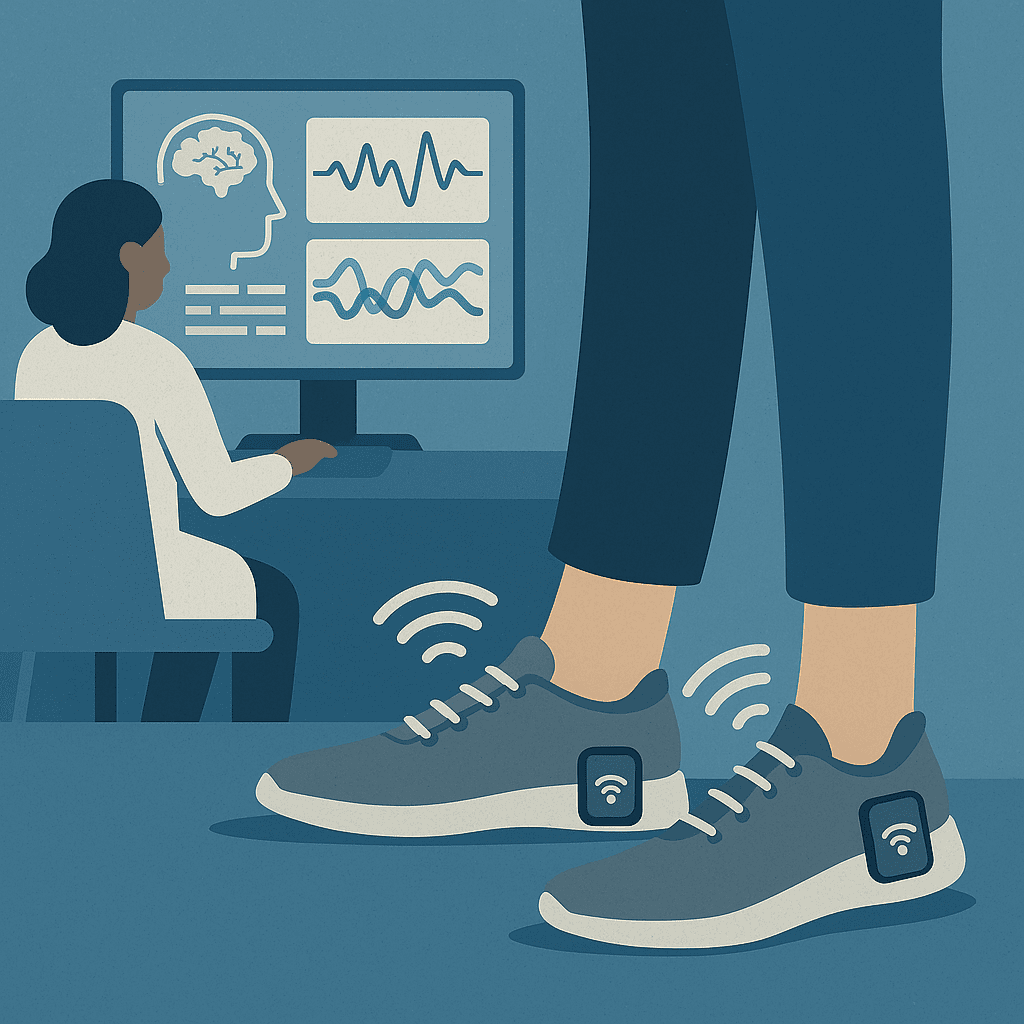

In my Master’s thesis, I explored how machine learning and deep learning can use gait data from foot-worn sensors to distinguish between Idiopathic Parkinson’s Disease (iPD) and Atypical Parkinsonism (APD, including MSA and PSP).
The results are very encouraging:
-
Binary classification (iPD vs APD) achieved strong performance — F1-scores up to 0.84 in the lab and 0.78 at home — showing that wearable sensors can provide reliable, minimally intrusive diagnostic insights.
-
ML models excelled in low-data settings and offered interpretable results.
-
DL models using raw sensor data proved robust across multiple sessions, demonstrating the potential of advanced AI for real-world applications.
-
Testing in home environments confirmed that accurate classification is possible outside of the lab, moving closer to practical clinical use.
This work shows that wearable gait analysis combined with AI can support earlier and more precise diagnosis of parkinsonian disorders, laying the foundation for future research and real-world applications.